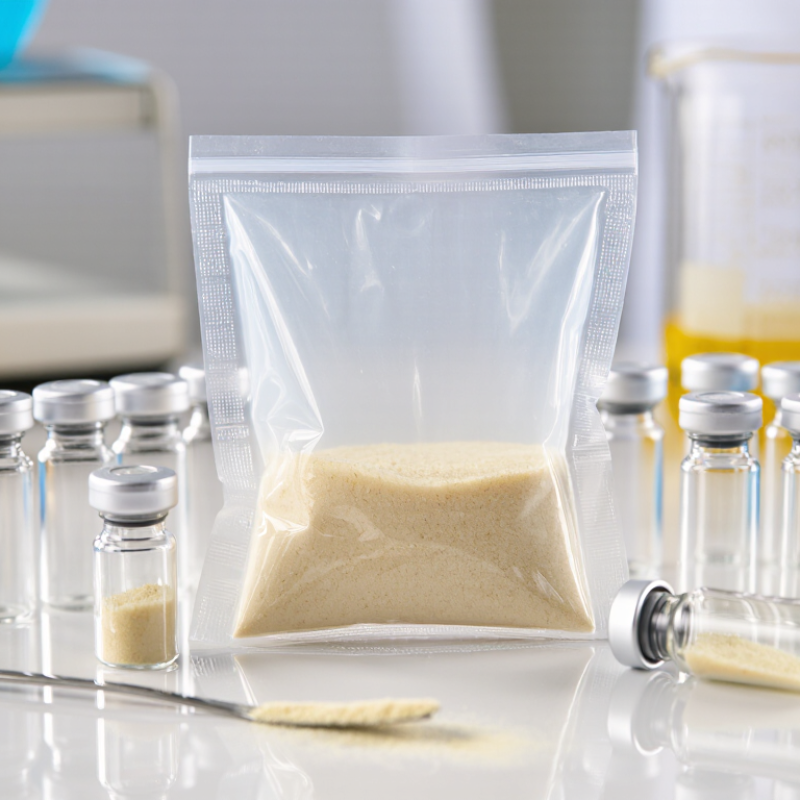
Sourcing Ascorbyl C Bioflavonoids in bulk requires more than comparing prices on a supplier spreadsheet. Buyers must confirm identity, potency, bioflavonoid composition, and manufacturing consistency before approving a shipment. A pale powder, sealed in a moisture-barrier bag, should still be tested independently. Appearance cannot prove quality.
Vitamin C researcher Dr. Mark Levine has stated, “Vitamin C is an essential nutrient and a cofactor for several important enzymes.” This perspective matters when evaluating Ascorbyl C Bioflavonoids, because the ingredient’s value depends on scientific accuracy and controlled processing. Reliable suppliers should provide a current certificate of analysis, assay results, allergen information, microbiological limits, heavy-metal testing, and full batch traceability. They should also explain the source of the bioflavonoids and the manufacturing location.
A careful sourcing process includes requesting representative samples before negotiating annual volumes. Compare test results between batches, not only between suppliers. Ask how the material is protected from heat, oxygen, and humidity during storage and transport. Packaging details matter. So do lead times.
Some suppliers may describe their material as “premium” without defining the claim. That is a warning sign. A polished website is not evidence. Still, even a documented supplier deserves periodic verification, because specifications can drift over time. This is where many purchasing plans remain imperfect. Independent laboratory testing adds cost, but it can reveal problems before production begins. The strongest sourcing decision balances technical evidence, transparent communication, stable supply, and realistic quality expectations.
How to Source Ascorbyl C Bioflavonoids in Bulk?
Ascorbyl C bioflavonoids generally combine vitamin C with plant-derived flavonoid compounds. The name is not always standardized across suppliers. Buyers should confirm the exact chemical form, vitamin C assay, flavonoid ratio, and carrier materials before comparing prices. These details affect potency, flowability, taste, and finished-product stability.
The NIH Office of Dietary Supplements lists adult vitamin C requirements at 75 mg daily for women and 90 mg for men. It also sets 2,000 mg as the adult upper intake level. These figures help formulators evaluate serving sizes without treating “more” as automatically better. Bioflavonoids are often used in capsules, powders, drink mixes, and fortified foods. Evidence for added benefits can vary, so careful wording matters.
A reliable bulk purchase needs more than a low quotation. Request a recent certificate of analysis, identity testing, vitamin C assay, flavonoid profile, microbial limits, heavy-metal results, and residual-solvent data. Check stability under heat and humidity, especially when shipping through tropical regions. USP quality guidance and ISO-based laboratory systems can support supplier evaluation, but certificates still require verification. I would also test a retained sample before approving a full shipment. One overlooked issue is oxidation. It can reduce assay values during storage, even when the powder looks unchanged. Human error remains possible.
Ascorbyl C bioflavonoid products typically combine vitamin C with citrus-derived bioflavonoids. The chart below shows established daily vitamin C reference intakes that can help guide formulation discussions, dosage planning, and bulk purchasing requirements.
Values represent the U.S. National Institutes of Health recommended dietary allowance for vitamin C: adult men 90 mg/day, adult women 75 mg/day, pregnancy 85 mg/day, and lactation 120 mg/day. People who smoke require an additional 35 mg/day. No official daily allowance has been established specifically for citrus bioflavonoids. Bulk buyers should separately verify vitamin C assay, bioflavonoid specification, identity, purity, packaging, and stability documentation.
Source: U.S. National Institutes of Health, Vitamin C Fact Sheet for Health Professionals
How to Source Ascorbyl C Bioflavonoids in Bulk?
Defining Quality, Purity, and Bulk Sourcing Requirements
Bulk sourcing begins with a precise specification, not a supplier’s product name. Define the vitamin C form, bioflavonoid ratio, active assay, appearance, odor, particle size, and permitted excipients. Ask whether the material is a blend or a single standardized extract. This distinction affects testing, pricing, and production performance.
Request a recent certificate of analysis for every production lot. It should identify the assay method, moisture level, microbiological results, heavy metals, and residual solvents. HPLC or another validated method can support identity and potency claims. Do not rely on a generic specification sheet. A retained sample, sealed in its original packaging, allows comparison during incoming inspection.
Traceability matters.
Review the manufacturer’s quality system, batch records, allergen controls, and change-notification process. Check packaging before purchase: moisture-barrier bags, tamper evidence, lot numbers, and clear storage instructions are practical details. Confirm minimum order quantities, lead times, shelf life, and temperature requirements in writing. An independent laboratory can verify high-risk parameters before a large shipment is released.
Purity alone does not define suitability. Ascorbyl C Bioflavonoids may darken, cake, or lose potency when exposed to heat, oxygen, or humidity. A clean-looking powder can still fail an identity test. Even experienced buyers can overlook blend uniformity or incomplete stability data. Leave room for review after the first batch, because real handling conditions may reveal weaknesses that documents cannot.
| Quality Dimension | Specification Item | Example Bulk Sourcing Requirement | Recommended Verification | Purchasing Evidence |
|---|---|---|---|---|
| Product Identity | Ingredient definition | A clearly defined blend of vitamin C, usually as ascorbic acid or an approved ascorbate, with specified citrus bioflavonoids. The formula should identify whether the bioflavonoid content is expressed as total bioflavonoids, hesperidin, or another marker. | Review the product specification, formulation statement, and identity testing for each declared component. | Current specification sheet, formulation statement, and certificate of analysis. |
| Potency | Vitamin C assay | Typically 95.0%–105.0% of the declared vitamin C content at release, unless the contract specification states a different validated range. | HPLC or another validated quantitative method suitable for ascorbic acid and the selected matrix. | Batch-specific assay result, analytical method reference, and laboratory qualification information. |
| Potency | Bioflavonoid marker | Set a defined minimum for total bioflavonoids or a named marker such as hesperidin. The numerical limit must match the agreed formula because commercial blends vary substantially. | HPLC or validated spectrophotometric testing, with the reporting basis clearly stated. | Certificate of analysis showing the marker, result, unit, and specification limit. |
| Purity | Appearance and color | Uniform fine powder, typically white to pale yellow or yellow, free from visible foreign matter, abnormal agglomeration, and persistent off-odor. | Visual inspection under defined lighting and comparison with an approved reference sample. | Approved product description and retained reference sample procedure. |
| Physical Properties | Moisture or loss on drying | A practical starting limit is not more than 5.0%, subject to the formulation, carrier system, and validated stability data. | Loss on drying or validated moisture-specific analysis. | Batch result, method reference, and storage-condition statement. |
| Physical Properties | Particle size | Define the required milling or sieving profile, such as a minimum percentage passing an agreed mesh, only when it is important for blending, dissolution, or encapsulation. | Sieve analysis or laser diffraction using a documented sampling procedure. | Particle-size specification and batch test result. |
| Contaminant Control | Heavy metals | Use destination-market limits. An example internal screening profile is lead not more than 3.0 mg/kg, arsenic not more than 1.0 mg/kg, cadmium not more than 1.0 mg/kg, and mercury not more than 0.1 mg/kg. | ICP-MS or ICP-OES after appropriate sample preparation. | Recent contaminant panel, laboratory accreditation details, and regulatory compliance statement. |
| Contaminant Control | Pesticide residues | Comply with the residue limits applicable to the source materials and destination market. Citrus-derived materials should have a risk-based pesticide monitoring plan. | Validated multi-residue LC-MS/MS and GC-MS/MS testing where applicable. | Pesticide residue report and documented agricultural or raw-material control program. |
| Microbiology | Microbiological quality | Example powder limits: total aerobic microbial count not more than 1,000 CFU/g; total yeast and mold count not more than 100 CFU/g; absence of Salmonella in 25 g and absence of Escherichia coli in 1 g. | Compendial or validated microbial enumeration and specified-organism methods. | Batch microbiology report and environmental or hygiene control summary. |
| Allergen and Safety | Allergen and GMO status | Declare whether the finished blend contains or may contact major allergens. Provide a GMO statement based on the raw-material supply chain and applicable local definitions. | Supply-chain review supported by targeted testing when risk assessment indicates it is necessary. | Allergen declaration, GMO statement, and cross-contact assessment. |
| Stability | Shelf life and storage | A 24-month shelf life may be considered only when supported by real-time or accelerated stability data. Store in a cool, dry place, protected from light, heat, oxygen, and humidity. | Stability monitoring of vitamin C potency, bioflavonoid marker, moisture, appearance, and microbiology. | Stability summary, retest or expiry policy, and recommended storage conditions. |
| Packaging | Bulk-pack configuration | Common commercial formats include 5 kg, 10 kg, or 25 kg net packs using food-contact-compatible inner liners and protective outer containers. Final pack size should match handling and production needs. | Packaging inspection for seal integrity, net weight, labeling accuracy, and tamper evidence where required. | Packaging specification, packing list, net-weight record, and label artwork approval. |
| Traceability | Lot and batch control | Every shipment should have a unique lot number linked to production date, raw-material lots, processing records, test results, and quantity released. | Document review and mock traceability exercise from finished lot to incoming raw materials. | Lot traceability statement, batch record summary, and recall or withdrawal procedure. |
| Supplier Qualification | Quality-system capability | Prioritize documented GMP-based controls, preventive risk management, calibrated equipment, deviation handling, change control, and complaint management. | Quality questionnaire, remote or on-site audit, and review of relevant corrective-action records. | Quality manual summary, audit report, GMP evidence, and change-notification policy. |
| Commercial Terms | Minimum order and supply continuity | Define minimum order quantity, forecast volumes, production lead time, reserved capacity, safety stock, and acceptable partial-shipment conditions before issuing a purchase order. | Compare quoted capacity with historical delivery performance and planned demand. | Commercial quotation, lead-time commitment, supply agreement, and business-continuity plan. |
| Pre-Shipment Control | Approval before release | Require review of the batch certificate, packaging photographs or inspection record, shipping conditions, and retained sample availability before dispatch. | Documented pre-shipment checklist and independent or buyer-side testing for initial lots. | Pre-shipment approval record, final certificate of analysis, and shipment release authorization. |
Reliable sourcing begins with verifying the ingredient, not comparing prices alone. Confirm the exact chemical identity, active content, appearance, solubility, packaging, and intended application.
Ask each manufacturer for a current specification sheet and certificate of analysis. The testing method matters. A reported purity value is less useful without clear analytical details.
Qualified manufacturers should also provide batch traceability, allergen statements, stability information, and documented quality systems. Audits, GMP practices, and ISO-based procedures can support confidence, but certificates should be checked for validity and scope.
Request representative samples before placing a large order. Compare color, odor, dispersibility, and test results against your written specifications.
Ask whether production occurs in controlled facilities and whether raw materials are screened for contaminants. Independent laboratory verification is useful for higher-risk purchases.
A polished document is not proof of consistent manufacturing. Communication quality matters too. Reliable suppliers answer technical questions directly and explain limitations.
Some vendors may lack perfect documentation, so this is where careful judgment is needed.
Tips:
Sourcing Ascorbyl C bioflavonoids in bulk requires more than comparing the quoted price per kilogram. Ask for a current specification sheet, certificate of analysis, assay method, moisture limit, particle size, and allergen statement. In my purchasing experience, the lowest quote was not always the lowest landed cost. Freight, testing, customs handling, and repacking fees changed the final figure. Request both EXW and delivered pricing for a fair comparison.
Packaging affects stability and warehouse efficiency. Light-sensitive material may require sealed, foil-lined bags inside fiber drums or cartons. Confirm the net weight per unit, pallet pattern, labeling, and storage temperature before placing an order. Smaller 1-kilogram or 5-kilogram packs can reduce opening waste, but they usually cost more per kilogram. A 25-kilogram pack may lower the unit price. It can also create handling problems for smaller production teams.
Minimum order quantities vary by whether the material is ready stock or made to specification. A practical request is a sample, followed by a pilot order, before committing to a full pallet. Lead times may range from several days for verified stock to multiple weeks for production, testing, and export preparation. Get the production date, retest period, and shipment schedule in writing. One detail is easy to miss: a short lead time may reflect old inventory, not efficiency. I would rather accept a slower shipment than receive material with unclear traceability.
Sourcing Ascorbyl C Bioflavonoids in bulk requires more than comparing prices.
Ask suppliers for a current specification, certificate of analysis, safety data, and traceability records. The documents should identify the exact material, assay range, botanical source, processing method, and lot number. Confirm that the documentation matches the shipment, not an older sample. A clean certificate is not proof by itself.
Request independent testing for identity, potency, moisture, microbial limits, heavy metals, and relevant contaminants. Use a qualified laboratory when the material supports a regulated product. Keep retention samples from each lot. Review chromatograms when available, because a pass-or-fail result may hide unusual peaks.
I would not approve a shipment from paperwork alone. Testing can still miss poor sampling.
Storage conditions deserve equal attention.
Use sealed, food-grade packaging with clear labels and tamper evidence. Protect the powder from heat, direct light, humidity, and repeated temperature changes. A cool, dry warehouse is useful, but “dry” needs measurement. Record temperature and humidity continuously when practical. Inspect bags or drums for swelling, leaks, caking, or damaged liners before acceptance.
Delivery terms should define packaging, pallet protection, transit temperature, expected shelf life, and responsibility for delays.
Check the goods immediately after arrival, then quarantine them until quality review is complete. Some buyers release materials too quickly. That mistake can become expensive. Batch records, photographs, and receiving logs create stronger evidence when a discrepancy appears. Recheck storage after opening, because the original shelf-life assumption may no longer fit partial-use conditions.
They generally combine vitamin C with plant-derived flavonoid compounds. The name is not fully standardized. Confirm the exact chemical form, vitamin C assay, flavonoid ratio, and carrier materials.
Request a current specification sheet and certificate of analysis. Check identity, active content, appearance, solubility, packaging, and intended use. Price differences may reflect testing, stability, or packaging quality.
Useful tests include identity, vitamin C potency, flavonoid profile, moisture, microbial limits, and heavy metals. Residual-solvent testing may also matter. Review analytical methods, not only final numbers.
Ask for batch traceability, allergen statements, stability data, and documented quality procedures. Request representative samples before ordering a large quantity. Direct answers usually matter more than polished documents.
Independent testing can confirm identity and potency before release. It may also detect contamination or unusual analytical peaks. Testing is not perfect, especially when sampling is weak.
Keep it sealed, cool, dry, and protected from direct light. Track temperature and humidity when practical. Inspect for caking, leaks, swelling, or damaged inner liners.
Confirm food-grade packaging, tamper evidence, pallet protection, transit temperature, and expected remaining shelf life. Define responsibility for delays or damaged goods. Small details become expensive later.
No. Compare the shipment’s lot number with every document. Keep a retained sample and quarantine the material until review is complete. A certificate can look perfect. Mistakes still happen.
Oxidation may reduce assay values while the powder still looks unchanged. Heat, humidity, light, and repeated temperature changes can worsen stability. I would verify conditions again after opening the package.
Sourcing Ascorbyl C Bioflavonoids in bulk requires a clear understanding of the ingredient’s intended applications, quality expectations, and purchasing requirements. Buyers should define the desired grade, purity level, formulation purpose, quantity, packaging format, minimum order volume, and target delivery schedule before contacting suppliers. They should also evaluate whether the material is suitable for use in supplements, functional foods, cosmetics, or other permitted applications.
Reliable sourcing depends on working with qualified manufacturers or suppliers that can provide consistent documentation and transparent production information. Before placing an order, request certificates of analysis, specifications, testing results, batch traceability, and details regarding storage and transportation conditions. Comparing quotations should include more than the unit price; packaging, lead times, payment terms, order quantities, and logistics costs can significantly affect the total purchasing cost. Proper storage and controlled delivery are also essential for maintaining product quality from production through final receipt.

Chenlv Herb