China Top 10 Ascorbic Acid and Rutin Manufacturers?

Time:2026-10-12 Author:Sophia
0%

China has become a major sourcing base for pharmaceutical-grade ascorbic acid and botanical flavonoids. Its manufacturers serve nutrition, food, cosmetic, and pharmaceutical markets worldwide. This guide examines China’s top 10 Ascorbic Acid And Rutin manufacturers through practical purchasing criteria.

The review considers product assay, production capacity, GMP systems, ISO certification, batch traceability, testing methods, and export experience. A reliable supplier should provide a current certificate of analysis, specification sheet, allergen statement, and stability information. Buyers should also check particle size, packaging conditions, heavy-metal limits, and microbiological results. Small details matter.

Market reports indicate continued demand. Grand View Research reported steady growth in the global vitamin C market, supported by dietary supplements, functional foods, and pharmaceutical applications. Fortune Business Insights also identified expanding consumer interest in immune-health products. However, market estimates differ between reports. Definitions are not always consistent.

The NIH Office of Dietary Supplements lists vitamin C as an essential nutrient, with adult recommended intakes of 75 to 90 milligrams daily. Rutin has no comparable official dietary recommendation. Therefore, product claims require careful review. The late chemist Linus Pauling wrote, “Vitamin C is the most important antioxidant in the body,” in How to Live Longer and Feel Better. His statement remains influential, but it should not replace current clinical evidence.

This ranking is not absolute. Public capacity figures can be incomplete, and factory quality may change after an audit. The strongest manufacturers combine consistent assay results, responsive documentation, transparent sourcing, and realistic technical support. That is where this comparison begins.
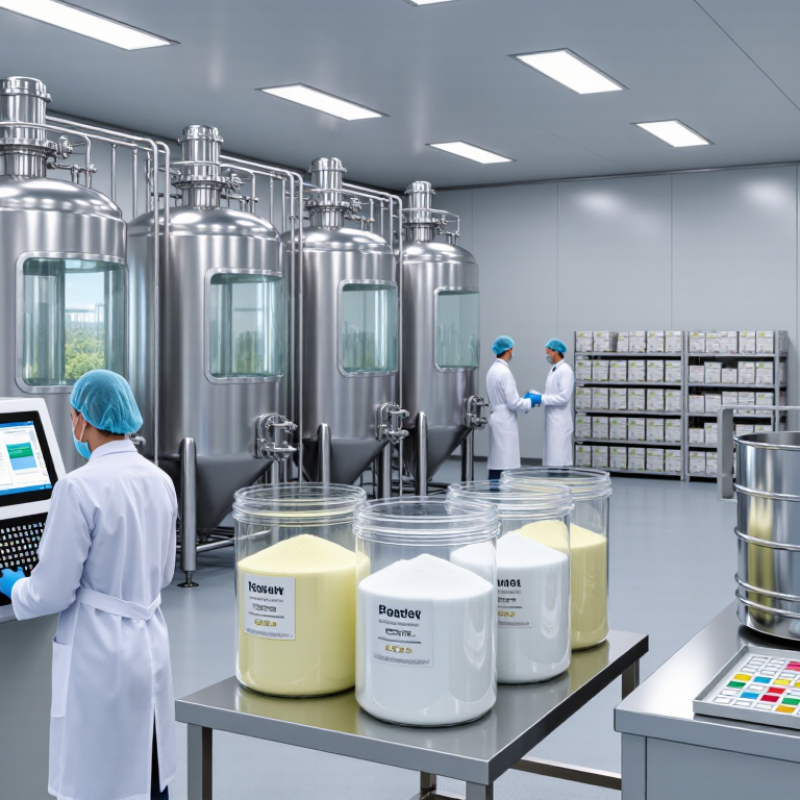
China Top 10 Ascorbic Acid and Rutin Manufacturers?

What Are Ascorbic Acid and Rutin and How Are They Used?

Ascorbic acid is vitamin C Ascorbic acid is vitamin C, a water-soluble nutrient found in fruits and vegetables. It supports collagen formation, immune function, and iron absorption. The National Academies’ Dietary Reference Intakes recommend 90 milligrams daily for adult men and 75 milligrams for adult women. Smokers need 35 milligrams more. The NIH Office of Dietary Supplements sets 2,000 milligrams as the adult daily upper limit.

Rutin is a plant flavonoid glycoside Rutin is a plant flavonoid glycoside. It occurs naturally in buckwheat, apples, and some citrus tissues. Unlike ascorbic acid, rutin has no established daily requirement. Food, nutraceutical, and cosmetic formulators use it for antioxidant and vascular-support positioning. However, human evidence remains uneven. A laboratory result is not a clinical promise. That distinction matters.

Their physical behavior also differs Their physical behavior also differs. Ascorbic acid dissolves readily in water but can degrade with oxygen, light, heat, and moisture. Rutin is less water-soluble, creating formulation challenges in tablets, drinks, and topical products. In practice, responsible manufacturers verify identity, assay, residual solvents, heavy metals, microbiology, and stability. ISO 22000-based systems and validated laboratory methods improve traceability, but they do not guarantee every batch. This is where sourcing decisions can become imperfect. Specifications may look excellent, while packaging or storage quietly reduces potency. The NIH Office of Dietary Supplements and European Food Safety Authority reports remain useful references for checking dosage, function, and evidence quality.

How to Evaluate Chinese Ascorbic Acid and Rutin Manufacturers

China Top 10 Ascorbic Acid and Rutin Manufacturers?

Evaluating Chinese ascorbic acid and rutin manufacturers requires more than comparing prices. Grand View Research estimated the global vitamin C market at about USD 1.1 billion in 2023, with continued growth expected through 2030. This demand attracts both experienced producers and trading companies. Ask for a valid manufacturing license, recent third-party audit, and batch-specific certificates of analysis. Check assay, moisture, heavy metals, microbiological limits, and residual solvents against USP, Ph. Eur., or applicable Chinese standards.

For rutin, confirm the botanical source and extraction method. HPLC chromatograms should show purity and identifiable peaks, not only a single percentage on a certificate. Request three recent batches, stability data, packaging photos, and traceability from raw material to finished powder. UN Comtrade records under HS 293627 also show China as a major exporter of ascorbic acid products, but export volume alone cannot prove quality. A supplier may provide excellent documents and still perform poorly during a production visit. I have seen this gap before. It deserves attention.

Tips: Compare samples from at least three factories. Verify certificates directly with issuing laboratories. Use an independent inspection before shipment. Check whether production capacity matches the quoted lead time. Be cautious when the supplier refuses a live factory audit or provides identical test data for every batch. Reports can conflict, and my own screening may miss hidden subcontracting. That is why documented evidence should outweigh polished sales language.

China Top 10 Ascorbic Acid and Rutin Manufacturers? - How to Evaluate Chinese Ascorbic Acid and Rutin Manufacturers
No. Evaluation Dimension Ascorbic Acid Benchmark Rutin Benchmark Documents or Evidence to Request Recommended Assessment
1 Chemical Identity CAS 50-81-7; commonly supplied as L-ascorbic acid. CAS 153-18-4; commonly supplied as rutin trihydrate or a specified rutin grade. Current specification, certificate of analysis, identification test, and structural or chromatographic data. Mandatory
2 Assay and Purity Food and pharmaceutical grades are commonly specified at approximately 99% assay or higher, subject to the applicable standard. Commercial grades are commonly offered at 95% or 98% assay; the exact basis and hydration state must be stated. Lot-specific assay result, test method, calculation basis, and product specification. Mandatory
3 Quality Management System A qualified facility should maintain a documented quality system appropriate to the intended use, such as food, supplement, cosmetic, or pharmaceutical applications. Valid ISO 9001, ISO 22000, FSSC 22000, GMP, or other relevant certificates, including scope and validity dates. High Priority
4 Regulatory Compliance The product should comply with the destination market's requirements for permitted use, labeling, contaminants, additives, and import documentation. Regulatory statement, allergen statement, non-GMO declaration, suitable food-contact or pharmaceutical documents where applicable. Mandatory
5 Contaminant Control Testing should cover relevant heavy metals, microbiological parameters, residual solvents, and other contaminants required by the product's intended application. Recent third-party or in-house laboratory reports with limits, results, test methods, and batch numbers. Mandatory
6 Physical Properties Color, odor, solubility, moisture, bulk density, and particle-size distribution should be controlled according to the buyer's process. Color, odor, moisture, solubility, bulk density, and particle-size distribution can vary significantly by extraction, purification, and milling process. Technical data sheet, retained sample, particle-size report, and agreed acceptance criteria. High Priority
7 Stability and Shelf Life Ascorbic acid is sensitive to oxidation, light, heat, moisture, and certain metal ions; packaging and storage conditions are critical. Rutin stability depends on moisture, light, temperature, formulation, and the specified hydration state. Stability data, recommended storage conditions, shelf-life statement, packaging specification, and transport precautions. High Priority
8 Batch Consistency and Traceability Each batch should be traceable from raw materials through production, laboratory release, packing, and shipment. Batch numbering procedure, production records, sample retention policy, deviation records, and change-control procedure. Mandatory
9 Production and Supply Capacity Capacity should be evaluated against the buyer's annual demand, required delivery frequency, peak-season risk, and minimum order quantity. Production lead time, monthly allocation policy, minimum order quantity, capacity statement, and business-continuity plan. High Priority
10 Commercial and Export Capability A reliable exporter should provide clear Incoterms, export documents, packing details, HS classification support, and responsive technical communication. Pro forma invoice, packing list, certificate of origin, safety data sheet, customs information, and written complaint-handling procedure. High Priority
11 Packaging and Logistics Moisture- and oxygen-sensitive material generally requires sealed, protective packaging and controlled storage away from heat and direct light. Packaging should protect the powder from moisture, light, contamination, and physical damage during storage and transit. Packaging material specification, net-weight tolerance, palletization details, container-loading photos, and storage instructions. High Priority
12 Sample Verification Pre-shipment approval should compare an independently tested production sample with the agreed specification and reference sample. Pre-shipment sample, independent laboratory report, approved standard sample, and signed quality agreement. Mandatory
13 Technical Support and Complaint Handling The supplier should provide timely investigation of deviations, corrective-action reports, replacement procedures, and technical support for storage or formulation issues. Response-time commitment, complaint form, root-cause analysis template, CAPA records, and recall procedure. Medium Priority
14 Total Cost of Ownership Supplier comparison should include product price, testing, packaging, freight, insurance, import duties, payment terms, rejected-batch risk, and inventory carrying cost. Formal quotation, payment terms, freight estimate, price-validity period, quality-risk assumptions, and landed-cost calculation. High Priority
15 Final Qualification Rule Select suppliers that pass identity, assay, contaminant, documentation, sample, and traceability checks before comparing price and lead time. Completed supplier questionnaire, audit report, approved vendor form, quality agreement, and purchase-trial results. Go / No-Go

China’s Top 10 Ascorbic Acid and Rutin Manufacturers

China’s Top 10 Ascorbic Acid and Rutin Manufacturers are often assessed through more than production volume. Experienced buyers examine purity, batch consistency, testing depth, and export reliability. Strong manufacturers usually provide clear certificates of analysis, HPLC results, microbiological data, and heavy metal reports. They should also explain raw material sourcing and storage conditions.

For ascorbic acid, stable crystallization and controlled moisture are important. Rutin requires careful extraction, purification, and protection from heat and light. The leading ten manufacturers typically operate under GMP-based systems and maintain traceable batch records. Independent laboratory testing adds confidence, especially for pharmaceutical and food applications. However, documents can become outdated. A supplier’s certificate does not replace a current sample test or an on-site audit.

Tips: Ask for three recent batch records. Compare assay results, appearance, packaging, and delivery performance. Check whether testing uses recognized methods. Request samples in sealed, labeled containers. Inspect warehouse cleanliness and temperature controls when possible. Do not select a manufacturer by price alone. That shortcut often creates hidden costs. A capable technical team should answer practical questions clearly, not only send promotional files. Even a well-managed factory may have occasional delays, so contingency planning remains sensible.

How Chinese Manufacturers Compare in Quality, Capacity, and Compliance

China’s leading ascorbic acid and rutin manufacturers differ more than a product list suggests. Quality begins with identity testing, assay results, impurity profiles, and stability data. During supplier reviews, I look for batch records, calibrated instruments, and retained samples. Small details matter. An evenly packed drum and a clear lot code can prevent costly confusion.

Capacity should be judged beyond stated annual output. A reliable factory can explain reactor availability, drying methods, warehouse conditions, and production backup plans. Large capacity means little if delivery schedules change without warning. Requesting three recent batch records often reveals more than a sales presentation. Results should remain consistent across seasons, not only during an audit.

Compliance requires practical evidence. Check current certifications, traceability procedures, change-control records, and testing for microbial or elemental impurities where applicable. Export documentation should match the actual manufacturing site and lot number. Strong suppliers welcome third-party audits and respond clearly to technical questions. Still, no review is perfect; translated records may hide context, and one successful sample cannot prove long-term performance. I would compare laboratory data with shipment history, complaint handling, and communication after payment. That final part is often overlooked.

China Top 10 Ascorbic Acid and Rutin Manufacturers? How Chinese Manufacturers Compare in Quality, Capacity, and Compliance

This standards-based comparison uses commonly referenced pharmacopeial assay thresholds. Assay is a measurable quality indicator, while manufacturing capacity and compliance must be verified through current audits, certificates, and supplier disclosures.

Reference points: ascorbic acid commonly requires an assay of at least 99.0%, while rutin commonly uses an assay specification of at least 95.0%. GMP, ISO certification, batch traceability, testing methods, and available capacity are supplier-specific and should be confirmed during qualification.

What Buyers Should Check Before Choosing a Chinese Supplier

A top-ten list is only a starting point. Buyers should verify each Chinese supplier independently. Ask for a recent certificate of analysis, not a sales brochure. The document should show assay, moisture, heavy metals, microbiological results, and batch details. For ascorbic acid, check identity and specific rotation when relevant. For rutin, review the HPLC method, purity basis, and particle-size data. The testing laboratory should be clearly identified. Vague reports create avoidable risk.

Request samples from the same batch proposed for commercial supply. Compare the sample with the COA and your internal specification. Check the sealed packaging, label accuracy, odor, color, and powder flow. Small details matter. Confirm production capacity, raw-material traceability, storage conditions, and export documentation. A remote video tour helps, but it cannot replace an independent audit. Review current quality certifications and verify their scope and validity. Also clarify change-control procedures, complaint handling, lead times, payment terms, and replacement policies. I have seen buyers focus on price and overlook inconsistent communication. That mistake becomes expensive after approval. No checklist is perfect. Keep retained samples, record every commitment, and reassess the supplier after the first shipment.

FAQS

What is ascorbic acid?

Ascorbic acid is vitamin C, a water-soluble nutrient found in fruits and vegetables. It supports collagen formation, immune function, and iron absorption.

How much ascorbic acid do adults generally need?

Adult men generally need 90 milligrams daily, while adult women generally need 75 milligrams. Smokers may need 35 additional milligrams. The adult upper limit is 2,000 milligrams daily.

What is rutin?

Rutin is a plant flavonoid glycoside found in buckwheat, apples, and some citrus tissues. It has no established daily requirement. Evidence for human benefits remains uneven.

How do ascorbic acid and rutin behave differently in products?

Ascorbic acid dissolves readily in water but can degrade through oxygen, light, heat, and moisture. Rutin dissolves less easily, creating challenges for tablets, beverages, and topical products.

What quality tests should buyers request?

Request identity, assay, residual-solvent, heavy-metal, microbiological, and stability results. Recent certificates and laboratory data matter more than attractive promotional claims.

How can buyers compare different batches?

Request three recent batch records. Compare assay results, appearance, packaging, and delivery performance. Small differences may reveal storage or process problems.

What packaging and storage details deserve attention?

Inspect sealed, labeled containers and suitable protection from moisture, heat, light, and oxygen. A clean warehouse with controlled temperature is helpful. Packaging is easy to underestimate.

Does certification guarantee consistent quality?

No certification guarantees every batch. Current sample testing, recognized methods, and occasional on-site audits provide stronger confidence. Even a careful supplier can experience delays. Build a backup plan.

Conclusion

This guide explores Ascorbic Acid And Rutin, two widely used ingredients in pharmaceutical, nutraceutical, food, and personal care applications. It explains their common functions, product forms, and quality considerations, while outlining how buyers can evaluate Chinese manufacturers based on production expertise, raw material control, testing systems, manufacturing capacity, certifications, and supply reliability. The article also presents a structured overview of China’s top 10 Ascorbic Acid and Rutin manufacturers without focusing on any specific brand names.

It further compares Chinese suppliers in terms of quality consistency, production scale, regulatory compliance, technical support, customization, packaging, and export experience. Before selecting a supplier, buyers should verify product specifications, certificates of analysis, quality management procedures, traceability, factory qualifications, minimum order quantities, lead times, pricing, and communication efficiency. A careful assessment of documentation, samples, testing results, and long-term cooperation capabilities can help buyers choose a dependable manufacturer that meets their application and market requirements.


Sophia

Sophia

Sophia is a dedicated marketing professional with an exceptional depth of knowledge about her company's products and services. With a keen understanding of market trends and customer needs, she crafts insightful blog posts that not only inform but also engage readers, enriching the company’s online......