Why Choose Ascorbate Calcium Bioflavonoid for Sourcing?
Choosing Ascorbate Calcium Bioflavonoid begins with understanding its practical value. This ingredient combines buffered vitamin C with calcium and naturally associated bioflavonoids. The result may suit manufacturers seeking a gentler, mineral-supported vitamin C format. However, “gentler” should not become an unverified marketing promise. Product performance still depends on formulation, dosage, stability, and individual tolerance.
As Dr. Mark Levine, a leading vitamin C researcher at the National Institutes of Health, stated, “Vitamin C is an electron donor, and this is the basis of all its known functions.” His observation highlights why ingredient identity and oxidative stability deserve serious attention. Reliable sourcing requires more than a polished specification sheet. Buyers should review certificates of analysis, assay results, calcium content, particle size, microbiological testing, heavy-metal limits, and batch traceability. Clear documentation matters.
Small details matter.
A dependable supplier should explain whether the bioflavonoid fraction is citrus-derived, standardized, or naturally variable. It should also describe packaging conditions, moisture protection, storage temperature, and expected shelf life. These details help purchasing teams compare suppliers with greater confidence. They also reveal weaknesses early. For example, inconsistent color may reflect natural variation, processing differences, or storage problems.
Ascorbate Calcium Bioflavonoid can be a thoughtful sourcing choice for supplements, functional foods, and specialized nutrition products. Still, no ingredient automatically guarantees superior results. Responsible evaluation combines laboratory evidence, supplier experience, regulatory awareness, and realistic product claims. The best sourcing decision may not be the cheapest one. It is the one supported by consistent quality, transparent records, and honest technical discussion.
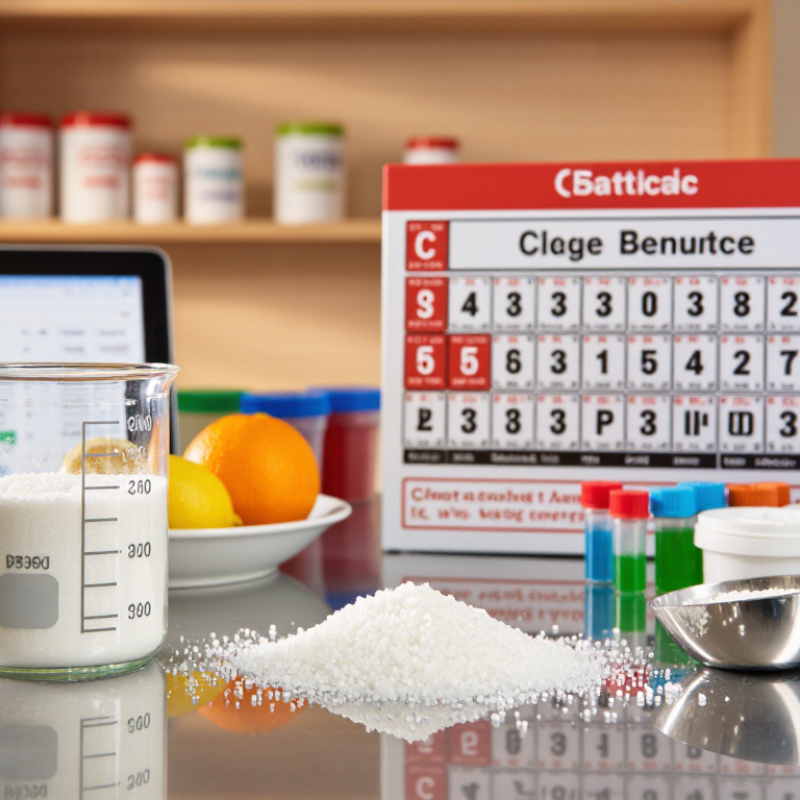
Calcium ascorbate bioflavonoid is a buffered vitamin C ingredient combined with plant-derived flavonoids.
Calcium ascorbate forms when ascorbic acid is neutralized with calcium. It is less acidic than free ascorbic acid. The ingredient may contain citrus flavonoids, such as hesperidin, rutin, or quercetin. However, “bioflavonoid” is not one fixed chemical identity. Its meaning depends on the declared plant source and testing method.
Composition requires careful verification.
Anhydrous calcium ascorbate contains about 90% vitamin C by molecular weight, while dihydrate material contains less because of bound water. Supplier specifications should state the exact form. They should also identify calcium content, vitamin C assay, flavonoid profile, moisture, microbial limits, and heavy metals. HPLC can measure ascorbic acid, while ICP-OES can confirm calcium levels. Small details matter.
The NIH Office of Dietary Supplements reports adult vitamin C requirements of 75–90 milligrams daily, with a 2,000-milligram tolerable upper intake level.
These figures describe nutrition, not product quality. Grand View Research valued the broader vitamin C market at approximately USD 1.1 billion in 2023 and projected continued growth through 2030. Market demand is strong, but category labels can still be vague. A sourcing review should request batch-specific certificates, identity testing, allergen statements, and stability data. The overlooked issue is often flavonoid consistency. It can vary with extraction, drying, and storage. That uncertainty deserves attention.
Calcium ascorbate combines vitamin C with a small amount of calcium in a buffered form.
This may feel gentler for people who dislike acidic supplements. The NIH Office of Dietary Supplements lists vitamin C’s adult recommended intake at 75–90 mg daily. It also sets the adult upper limit at 2,000 mg daily. Needs vary with age, diet, smoking, and medical conditions.
Vitamin C supports collagen formation, immune function, and antioxidant protection.
Calcium supports bones, teeth, muscle movement, and nerve signaling. The National Academies’ Dietary Reference Intakes report recommends 1,000–1,200 mg of calcium daily for most adults.
Bioflavonoids may complement antioxidant activity, but human evidence remains uneven. This matters. Laboratory findings do not always predict real-world benefits.
Sourcing should therefore focus on verified identity, assay results, contaminant testing, and stable packaging. A certificate of analysis is useful, but not perfect.
Tips: Check elemental calcium, not only total compound weight. Review vitamin C levels against the 2,000 mg upper limit. Ask for batch-specific testing. Store powder away from heat, light, and moisture. People with kidney disease, kidney stones, or medication concerns should seek professional advice before use. Formulation choices can still affect tolerance, absorption, and consumer trust.
Why Choose Ascorbate Calcium Bioflavonoid for Sourcing?
Key Quality Standards for Reliable Sourcing
Reliable sourcing starts with identity, not appearance. Calcium ascorbate should match its declared ascorbate content, calcium ratio, moisture level, and particle profile. Bioflavonoids also need verified identity and consistent concentration. The NIH Office of Dietary Supplements reports adult vitamin C recommendations of 75 mg for women and 90 mg for men. Its 2024 fact sheet lists 2,000 mg daily as the adult upper limit. These figures support careful labeling, but they do not replace batch testing.
I would request an ISO/IEC 17025-accredited laboratory report for every production lot. The report should cover assay, heavy metals, microbiological limits, residual solvents, and allergen status. USP microbiological chapters <61> and <62> provide recognized approaches for enumeration and specified organisms. Good sourcing also requires stability data under defined temperature and humidity conditions. A certificate alone is not enough. Test the raw material independently when risk or price seems unusual. That extra step may expose sampling errors, oxidation, or inconsistent bioflavonoid levels. Small details matter. Documentation should connect the batch number, sampling date, method, and analyst. Some suppliers still provide attractive reports with missing methods. That is a warning, not a minor inconvenience. Reliable quality is measurable, traceable, and repeatable, although no supplier should promise perfection.
| Quality Dimension | Reliable Sourcing Benchmark | Recommended Verification | Why It Matters |
|---|---|---|---|
| Chemical Identity | Calcium ascorbate should be identified as a calcium salt of ascorbic acid. The anhydrous molecular formula is C12H14CaO12, with a relative molecular mass of approximately 390.31. | Confirm identity by FTIR or another validated spectroscopic method, supported by a complete certificate of analysis. | Prevents substitution with free ascorbic acid, other mineral ascorbates, or unidentified blends. |
| Vitamin C Assay | For anhydrous calcium ascorbate, the theoretical ascorbic acid content is approximately 90.25% by mass. The release specification should state whether results are reported on an anhydrous or as-is basis. | Use a validated HPLC or titrimetric method and clearly document the calculation basis. | A defined assay basis allows meaningful comparison between suppliers and between hydrated and anhydrous material. |
| Calcium Content | The theoretical calcium content of anhydrous calcium ascorbate is approximately 10.27%. Actual limits should reflect the declared form, purity, and moisture specification. | Verify by ICP-OES, ICP-MS, or another validated elemental analysis method. | Helps confirm the salt form and supports accurate nutritional and formulation calculations. |
| Bioflavonoid Declaration | “Bioflavonoid” is a category rather than one single chemical substance. The specification should identify the source and marker compounds, such as hesperidin, narirutin, rutin, or total flavonoids. | Request an HPLC or validated spectrophotometric assay with a stated marker, reference standard, and reporting unit. | A defined marker system provides transparency and avoids vague or non-comparable bioflavonoid claims. |
| Moisture and Physical Stability | Set a documented moisture limit appropriate to the material form, typically using loss on drying or Karl Fischer analysis. The powder should remain free-flowing, with no visible caking or abnormal discoloration. | Test moisture, appearance, bulk density, particle-size distribution, and dispersibility where relevant to the final application. | Moisture can affect vitamin C stability, flow properties, blending uniformity, and shelf life. |
| Heavy Metals and Elemental Impurities | Control lead, arsenic, cadmium, and mercury according to the applicable food, supplement, or pharmaceutical requirements. Elemental impurity risk assessment should consider ICH Q3D principles where applicable. | Use ICP-MS or ICP-OES with a method suitable for the intended market and product category. | Supports consumer safety and reduces the risk of non-compliance caused by contaminated mineral or botanical inputs. |
| Microbiological Quality | Specifications should address total aerobic microbial count, total yeast and mold count, and absence or limits for specified pathogens according to the intended use and applicable pharmacopoeial or food standards. | Use compendial methods such as USP <61> and USP <62>, or equivalent validated methods. | Ensures that the ingredient is suitable for use in supplements, foods, or other regulated formulations. |
| Residual Solvents and Processing Aids | If solvents are used during bioflavonoid extraction or processing, residual levels should comply with applicable limits, including USP <467> or ICH Q3C where relevant. | Request a residual-solvent statement and perform GC testing when the process risk or regulatory requirement warrants it. | Provides evidence that extraction and purification processes do not introduce unacceptable chemical residues. |
| Oxidation and Shelf-Life Control | The specification should include an expiry period supported by stability data, with protection from heat, moisture, light, and oxygen during storage and transport. | Review accelerated and real-time stability data, packaging suitability, and retain-sample results. | Ascorbic acid is oxidation-sensitive, so handling conditions directly influence potency and appearance. |
| Traceability and Documentation | Each lot should have a unique batch number, production date, retest or expiry date, country of origin, specification, certificate of analysis, and allergen or GMO status where applicable. | Audit document control, change-control procedures, deviation records, and sample retention practices. | Enables rapid investigation, consistent purchasing decisions, and efficient recall management. |
| Packaging and Storage | Use sealed, food- or pharmaceutical-grade packaging with an effective moisture and oxygen barrier. Store in a cool, dry place away from direct light and incompatible materials. | Inspect packaging integrity, label accuracy, transport conditions, and warehouse temperature and humidity records. | Appropriate packaging reduces degradation, contamination, caking, and loss of functional quality. |
Note: Acceptance limits should be finalized according to the declared calcium ascorbate form, bioflavonoid composition, intended application, and destination-market regulations.
Choosing calcium ascorbate bioflavonoid requires more than comparing prices. Manufacturing controls shape purity, consistency, and later formulation performance. Calcium ascorbate is commonly produced by neutralizing ascorbic acid with a controlled calcium source. Bioflavonoids may be blended afterward or processed with the vitamin component. That difference matters.
Ask suppliers for batch records, specifications, and current certificates of analysis. Verify identity, vitamin C assay, calcium content, moisture, microbial limits, and heavy metals through qualified testing. A certificate alone can look reassuring. It does not replace an audit. Review raw material origins, change-control procedures, and traceability from intake to final packing. Small variations in particle size can affect blending and capsule fill weight.
Stability deserves practical attention. Heat, oxygen, light, and humidity may gradually reduce ascorbate potency. Request real-time and accelerated stability data in the proposed packaging. Opaque, moisture-resistant containers can help, but packaging is not a complete solution. Check opening frequency, warehouse conditions, and transport exposure. Formulation trials should measure flow, compression, dissolution, and sensory properties. Bioflavonoids can add color, bitterness, or odor. A technically sound ingredient may still perform poorly in a finished powder.
One limitation is unavoidable: laboratory data cannot predict every production problem. Pilot batches often reveal caking or uneven distribution. Allow room for adjustment. Sourcing decisions should connect manufacturing evidence with the intended dosage form, storage period, and quality specifications.
Selecting calcium ascorbate with bioflavonoids requires more than comparing prices. A dependable supplier should provide clear specifications for identity, assay, calcium content, bioflavonoid profile, moisture, and particle size. Ask for recent certificates of analysis from each production lot. Generic documents are not enough.
Traceability matters. Review the raw material origins, batch coding, manufacturing controls, and storage conditions. Check whether the facility follows recognized quality systems, such as GMP or ISO-based procedures. Independent testing can verify heavy metals, microbiological limits, residual solvents, and allergen statements. It adds cost, but prevents expensive surprises.
Ask for stability data under the packaging conditions you will use. Light, heat, and humidity can affect powder quality. A supplier should explain its testing methods, sampling plans, and complaint procedures without avoiding technical questions. Request a small sample before approving a large order. Test its appearance, dispersibility, odor, and performance in your intended formulation.
Details reveal reliability.
I have seen sourcing decisions focus too heavily on certificate formatting. That can be misleading. A polished document does not prove consistent production. Compare several lots, not just one. Also examine communication speed, change-notification policies, minimum order quantities, and delivery records. The right product is not always the cheapest option; it is the one supported by evidence, realistic specifications, and responsive quality management. Even experienced buyers can overlook seasonal variability, so periodic requalification remains worthwhile.
It is buffered vitamin C combined with plant-derived flavonoids. Calcium ascorbate is less acidic than free ascorbic acid.
The term has no single chemical identity. It may refer to compounds such as hesperidin, rutin, or quercetin.
Anhydrous material contains about 90% vitamin C by molecular weight. Dihydrate material contains less because it includes bound water.
Request vitamin C assay, calcium content, flavonoid profile, moisture, particle size, microbial limits, and heavy metal results.
HPLC can measure ascorbic acid. ICP-OES can confirm calcium levels. Independent testing adds useful confirmation.
Review batch records, raw material origins, storage conditions, manufacturing controls, and recent lot-specific certificates.
Yes. Examine its color, odor, dispersibility, and formulation performance. Small samples can reveal practical problems.
Light, heat, and humidity may reduce quality. Packaging conditions should match the supplier’s stability data.
Not necessarily. Compare multiple lots, delivery records, communication, and change-notification practices.
Flavonoid consistency may change during extraction, drying, or storage. A polished certificate can still mislead.
Ascorbate Calcium Bioflavonoid is a specialized nutritional ingredient that combines vitamin C in a buffered calcium ascorbate form with naturally derived bioflavonoids. This composition is designed to provide antioxidant support while offering a gentler alternative to highly acidic vitamin C formats. Its nutritional value may support normal immune function, collagen formation, iron absorption, and protection of cells from oxidative stress. Bioflavonoids can also complement vitamin C activity and contribute to a well-rounded formulation.
For reliable sourcing, buyers should review identity, potency, purity, microbiological limits, heavy metal controls, allergen information, and documentation such as certificates of analysis. Manufacturing conditions, moisture control, packaging, shelf life, and compatibility with tablets, capsules, powders, or functional foods are equally important. Supplier evaluation should include production consistency, traceability, quality management systems, technical support, and transparent communication. Selecting the right Ascorbate Calcium Bioflavonoid requires balancing verified quality, formulation performance, supply stability, and suitability for the intended application.

Chenlv Herb