Explore our premium, certified plant-derived extracts developed under ISO & CE standards for clinical and industrial integration.
The primary plant cell wall is a dynamic, complex matrix dominated by cellulose microfibrils, hemicelluloses, and an intricate network of pectins. Pectin, a family of heteropolysaccharides rich in D-galacturonic acid, plays a vital role in maintaining structural integrity, mediating cellular adhesion, and responding to environmental stress. The extraction and modification of these polysaccharides require molecular precision to preserve their bio-activity and targeted physiological mechanisms.
Understanding the microstructural components—such as homogalacturonan (HG), rhamnogalacturonan I (RG-I), and rhamnogalacturonan II (RG-II)—is critical for advanced medical, cosmetic, and nutritional applications. These domains define the gelation, viscosity, and immunomodulatory properties of pectin. Our proprietary extraction processes isolate these fractions while maintaining their native molecular weight profiles, satisfying strict CE regulatory criteria.
Data-driven insights illustrating the rising global demand for standardized plant cell wall derivatives across key regulated regions.
The global industrial pectin and plant cell wall component market is projected to reach $1.8 Billion by 2028, growing at a CAGR of 7.2%, driven by natural excipients and functional foods.
Inquiries for CE Certification (MDR/EU regulations) have risen by 120% since 2023, reflecting a global shift toward validated plant-based therapeutic materials.
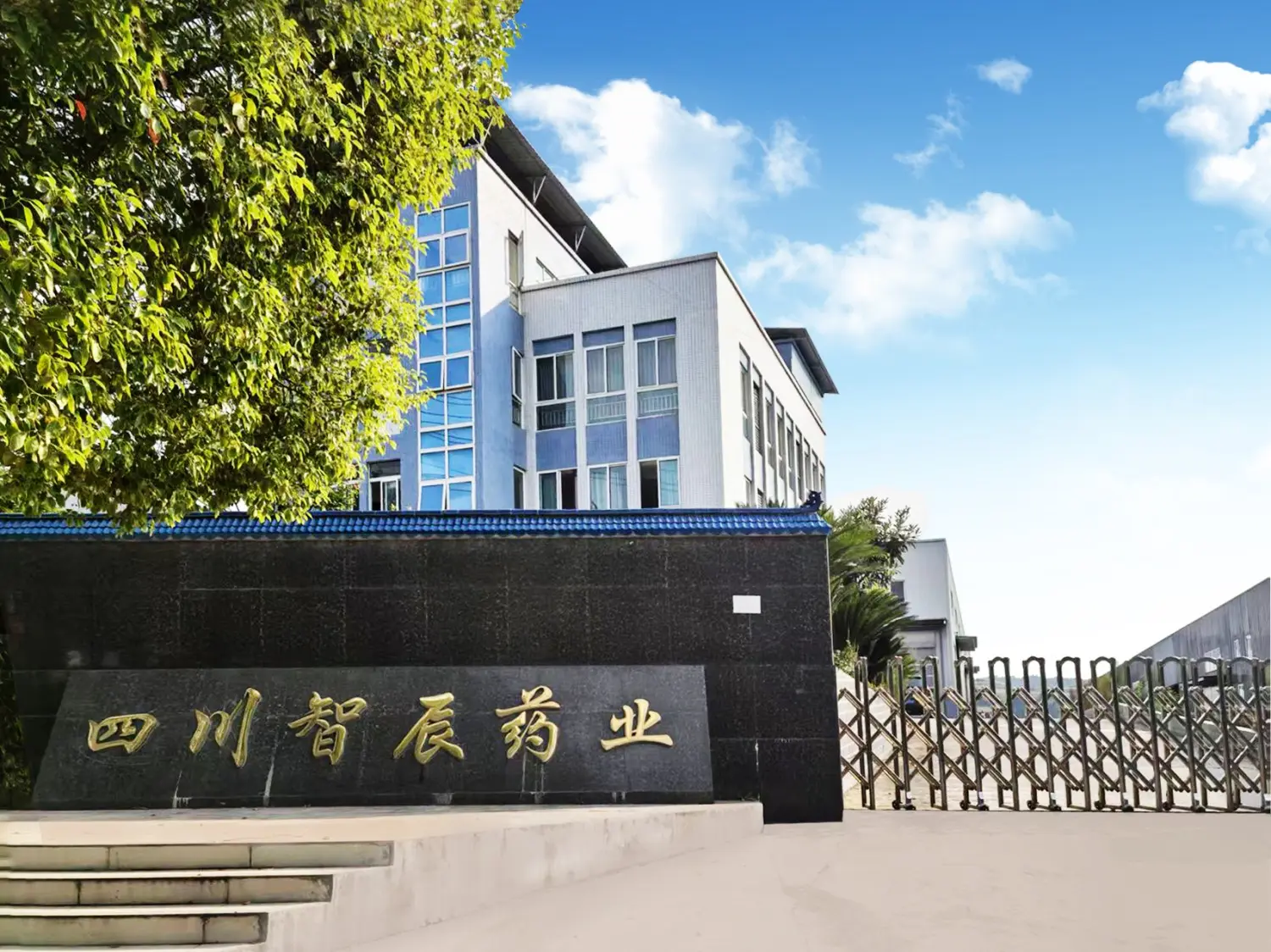
Our processing capacity has expanded to accommodate bulk client requirements, achieving over 9,500 square meters of production area designed for botanical extraction.
"The shift toward plant-derived polymers as functional carriers in biomedical delivery systems highlights the necessity of strict quality control. Standardized molecular weight distributions and validated impurity profiles are no longer optional—they are mandatory." — Dr. H. Zhang, Principal Bio-Research Director, Chengdu Chenlv Herb.
Years of Botanical Innovation
State-of-the-Art Factory Area
Standardized Bio-Products
Global Strategic Clients
How we design, refine, and certify pectin cell wall derivatives to match your exact therapeutic or functional specifications.
We consult directly with your scientific team to establish targeted molecular weight, degree of esterification (DE), and viscosity parameters.
Providing a comprehensive quotation based on yield projections, chromatography testing requirements, and compliance guidelines.
Finalizing specifications under non-disclosure agreements, establishing timeline milestones and regulatory goals.
Synthesizing pilot batches using advanced enzymatic modification or ultrasonic-assisted extraction techniques.
Industrial-scale extraction inside our standardized manufacturing facility, utilizing strict process monitoring to ensure batch-to-batch consistency.
Executing rigorous validation checks (HPSEC-MALLS, FTIR, heavy metals, endotoxin checks) and issuing a formal Certificate of Analysis (CoA).
Delivering validated products inside hermetically sealed packaging, complete with full regulatory import/export documentation.
Entering regulated markets like Europe and North America requires strict adherence to international safety metrics. Our pectin cell wall products and botanical derivatives are designed to meet CE Mark requirements, demonstrating compliance with EU safety, health, and environmental standards.
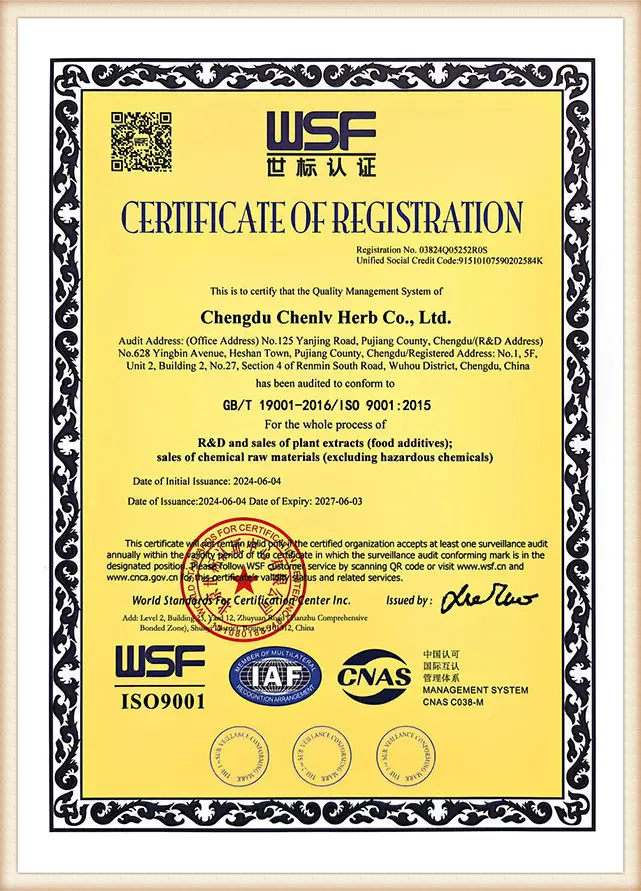
In addition to CE Certification, our facilities are certified under ISO9001, ISO22000, HALAL, KOSHER, and registered with the FDA. This comprehensive compliance network ensures our products seamlessly integrate into pharmaceutical pipelines, nutritional formulas, and functional cosmetics without regulatory delay.
CE Compliance, EFSA food standards, and MDR suitability.
FDA facility registration and compliance with GRAS limits.
How modified plant pectin and cell wall extracts solve specific challenges across diverse industrial sectors.

Utilizing low-methoxyl pectins and RG-I structures to develop targeted digestive supplements and prebiotic formulas that optimize human gut microbiome profiles.

Designing pH-sensitive pectin hydrogels that resist gastric acid, allowing targeted release of active APIs within the colon for therapeutic efficacy.

Incorporating natural cell wall fractions as non-toxic stabilizers and skin-calming agents, forming a breathable moisture barrier on the skin.

Replacing synthetic antibiotics with bioactive pectin fibers that reinforce mucosal barriers in livestock, improving nutrient absorption rates.
Pioneering the next generation of phytochemistry through advanced enzymatic engineering and structural modifications.
Conventional acid extraction methods can degrade the fine structure of rhamnogalacturonan branching. Our research focuses on using specific pectin methylesterases (PMEs) to achieve precise block-wise de-esterification. This allows us to tailor the gelation behavior of the pectin, making it suitable for delicate drug formulation requirements.
We are developing pectin-based nanoparticles by cross-linking modified pectins with bioactive divalent cations. These nanostructures protect unstable compounds—such as polyphenols or volatile terpenes—during processing and digestion, ensuring maximum bioavailability upon consumption.
Our manufacturing line integrates subcritical water extraction techniques, reducing organic solvent use to zero. By utilizing agricultural upcycling (processing citrus peels, apple pomace, and sugar beet pulp), we achieve an environmentally friendly production process that aligns with global corporate social responsibility goals.
Addressing the technical, regulatory, and commercial inquiries of researchers, quality control officers, and procurement managers.
A: CE Certification ensures that the plant cell wall extract meets the safety, health, and environmental protection requirements of the European Union. This is particularly vital for materials integrated into medical devices, wound dressings, and pharmaceutical drug excipients, guaranteeing low endotoxin levels and batch consistency.
A: High-methoxyl (HM) pectins (DE > 50%) require acid and high soluble solids to gel, making them suitable for traditional food applications. Low-methoxyl (LM) pectins (DE < 50%) gel in the presence of calcium ions, making them ideal for pharmaceutical formulations, micro-encapsulation, and low-sugar cosmetic gels.
A: Our pricing is determined by specification metrics (such as purity, molecular weight distribution, and certification scope). Initial quotes are provided within 24 hours of receiving target parameters, and custom manufacturing runs typically span 4 to 6 weeks, including full validation and certificate generation.
A: We employ state-of-the-art ICP-MS testing to detect and quantify heavy metals down to parts-per-billion (ppb) levels. Coupled with gas chromatography-mass spectrometry (GC-MS) for pesticide residue analysis, we guarantee our plant extracts comply with strict USP and EP standards.
Browse our second catalog tier, highlighting globally compliant botanical derivatives for cosmetic, food, and therapeutic formulations.
For inquiries about our products or custom price lists, leave your details with us and our support team will reply within 24 hours.
 Chenlv Herb